
Slim, and elegant folding room dividers.
Architectural folding doors designed for internal use
Contact us today to find out more.
A complete window and door solution for your property project.
SMARTIA MF6500 – slim internal folding doors
The MF6500 is part of the Alumil SMARTIA range, giving you the UK’s most technically capable internal bifold doors. Where most other suppliers provide exterio quality bifolds inside your home, with features you don’t need, MF6500 is designed for internal use with thinner profiles, interior-grade handles and increcible size capability if required.
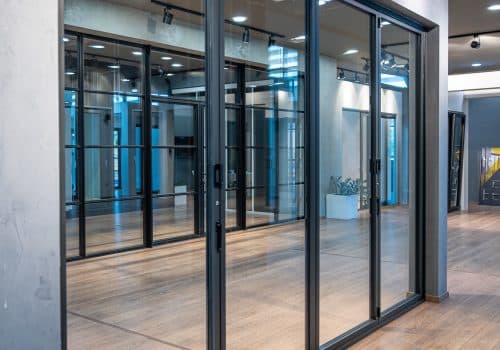
Sharing the same 88mm sash-to-sash sightline as our MF65, the UK’s slimmest bifold door, but strips back the thermal engineering to reduce cost and complexity where insulation serves no purpose inside.
Panel sizes and configurations
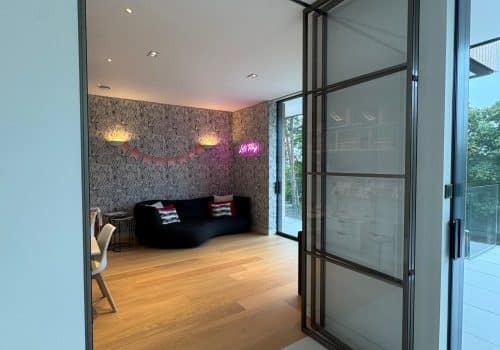
MF6500 supports panel sizes up to approximately 1.3 metres wide and 3.0 metres high. Large enough to address wide open-plan openings, room dividers and flexible partitions with confidence. Panels fold to one side or split to both, with traffic door options for everyday access.
Despite being a non-thermal system, MF6500 is designed for high traffic commercial buildings or the rigours of family living.
Suitable for open-plan living
Open-plan homes, kitchen-to-garden room transitions, office partitions, hospitality spaces — MF6500 suits any project where large, flexible openings need to feel substantial and refined rather than temporary or utilitarian. The slim sightlines keep glass prominent and frames minimal, exactly as a well-considered internal space should feel.
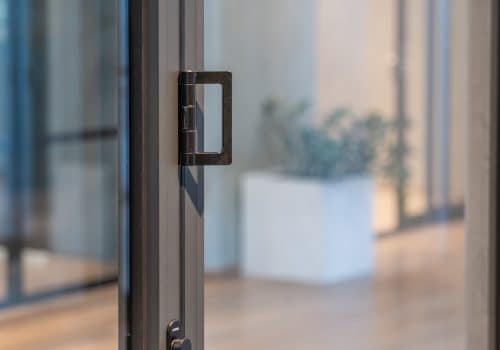
Hardware is heavy-duty by design, not by accident. Stainless steel tracks, multi-point latching on intermediate panels and robust locking on the main access leaf are all standard — specified for long-term reliability, not short-term impression.
Personalisation Options
MF6500 is finished using powder coating, anodising or dual-colour options in the full RAL or Anodised range of colours, metallic finishes and wood-effect treatments. Colour selection typically coordinates with internal finishes or relates to external doors where visual consistency across the building is a priority.
Low thresholds can be specified to maintain level internal floors and improve accessibility. For internal applications, threshold height is typically determined by floor finishes and user preference rather than weather protection requirements.